

The EB-5 Program has drawn considerable investor interest from families wanting to secure permanent residence in the United States (U.S.) through a structured immigration solution. In the years following the Reform and Integrity Act (RIA) of 2022, EB-5 Program overview has strengthened thanks to improved oversight, faster processing timelines, particularly for rural EB-5 projects, concurrent filings, and reserved visa categories. Applications are expected to surge even more as there is an impending grandfathering EB-5 deadline on September 30, 2026.
September 2026: The EB-5 Grandfathering Deadline – What is it?
The EB-5 Regional Centre Program is authorized by Congress until September 30, 2027, but the grandfathering protection deadline is a year prior, until September 30, 2026. This is a critical distinction that many investors overlook.
The EB-5 grandfathering provision protects investors who file Form I-526-E before a defined deadline – September 30, 2026. Petitions properly filed while the EB-5 Program is active continue to be processed under those rules even if the Program later lapses. This protection is tied to the applicant’s filing date. Therefore, although the EB-5 Program is authorized through to September 30, 2027, the grandfathering protection applies only to petitions filed on or before September 30, 2026.
Petitions filed after the statutory deadline are not guaranteed continued processing if Congress decides not to re-authorize the EB-5 Program again.
To understand the significance of the statutory deadline and why it is vital when planning your EB-5 application, it is best to look back at how the 2021 lapse of the Regional Center Program unfolded.
July 2021: A Turning Point for EB-5 Investors
On June 30, 2021, congressional authorization for the EB-5 Regional Center Program expired. U.S. Citizenship and Immigration Services (USCIS) immediately stopped processing Regional Center petitions, and cases that had been pending for months, or even years, were frozen.
Families who had already invested U.S. $500,000 to U.S. $900,000 or more were left without clarity or a viable timeline on when applications would move forward.
The interruption had tangible immigration consequences for affected families:
- Main Applicant’s children nearing age 21 aged out and lost dependent eligibility
- H-1B visa holders faced expiring work authorization, without permanent residency
- F-1 students approached graduation with no clear path to remain in the U.S.
The lapse created uncertainty that affected thousands of investors globally. EB-5 cases were paused midstream, adjudications were disrupted, and many of the Program’s structural vulnerabilities surfaced. Congress later sought to address these issues through legislative reform.
March 2022: Congress Adds a Critical Protection to the EB-5 Program
Prior to the RIA of 2022, EB-5 investors had limited protection against a program lapse and inconsistent processing timelines.
When Congress reauthorized EB-5 through the 2022 RIA, it did more than restart the Program; it introduced major structural reforms and investor protections. Some of these included:
- Concurrent filing for eligible U.S.-based investors (Forms I-526E and I-485), allowing adjustment of status while petitions are pending
- Reserved visa set-asides for rural, high-unemployment, and infrastructure projects
- Enhanced oversight and compliance requirements for regional centers and project sponsors
- Priority processing for rural EB-5 projects.
Most importantly, Congress introduced a safeguard designed to prevent another 2021-style lapse: the EB-5 grandfathering rule.
Key Grandfathering Benefits for I-526E Petitions Filed by September 30, 2026 Deadline
1. Protection from future EB-5 lapses
If the EB-5 Regional Center Program lapses again after September 30, 2027, petitions filed on or before September 30, 2026 may continue to be adjudicated under the RIA grandfathering provision.
2. Locking in the U.S. $800,000 minimum investment
A U.S. $800,000 rural EB-5 investment remains valid once filed, even if future legislation increases minimum investment amounts.
3. Access to reserved visa set-asides
Reserved visa categories for rural, high unemployment, and infrastructure projects have significantly reduced backlogs for investors from China, India, and Vietnam. If Congress modifies or eliminates these reserved visa set-asides in the future, properly filed petitions will remain eligible under the existing rules.
4. Concurrent filing benefits for U.S.-based investors
U.S.-based investors who file Forms I-526E and I-485 concurrently before the September 30, 2026 deadline may obtain work authorization and advance parole, while their petitions are pending.
5. Child age protection under the Child Status Protection Act
Petitions filed before the deadline qualify for Child Status Protection Act (CSPA) age protection. For families with children approaching age 21, early filing may prevent aging out and loss of dependent eligibility.
Practical Preparation Considerations Before the September 30, 2026 EB-5 Deadline
EB-5 application preparation requires multiple interdependent components. Investors can benefit if they work backwards from the statutory deadline, to ensure adequate time is allocated for the review, documentation, capital transfer, and petition assembly. Typically the preparatory steps include:
Scheduling a consultation with an EB-5 immigration attorney
This allows families to review their timeline and source-of-funds documentation. Questions investors often ask at this stage are:
- How long will source-of-funds documentation take to prepare?
- Which documents should be collected now?
- What is a realistic EB-5 filing timeline?
Gathering source-of-funds documentation
Common documentation for the EB-5:
- Five years of personal and business bank statements
- Personal and business tax returns
- Documentation of asset sales, loans, gifts, or inheritances
- Business ownership records
- Contracts and financial records.
Researching EB-5 projects and Regional Centers carefully
EB-5 investment opportunity evaluation involves:
- Rural projects for priority processing and access to reserved visas
- Regional Centres with strong I-526E approval histories
- Conservative capital structures such as senior or mezzanine debt positions
- Job creation levels above the minimum 10 required threshold.
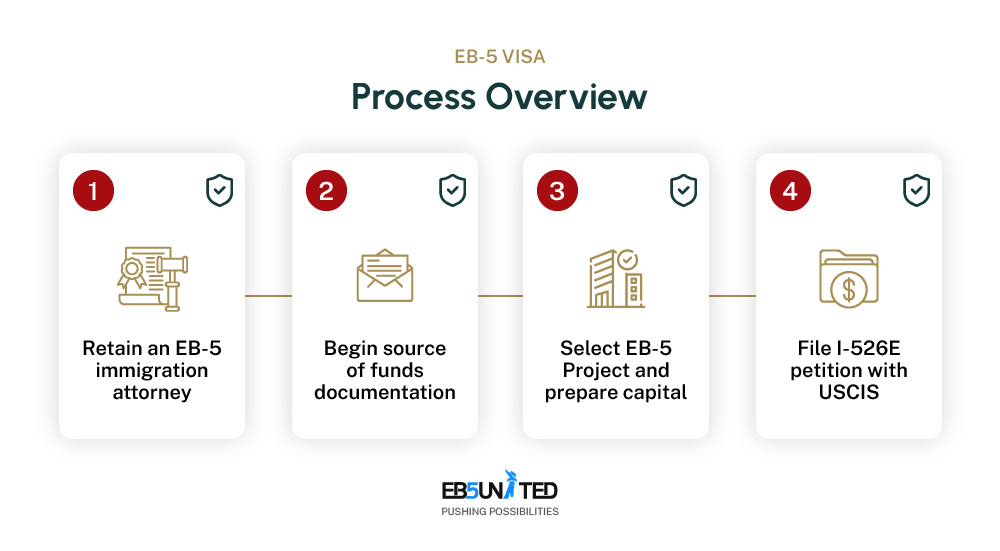
Grandfathering protection ultimately depends on timely and properly prepared filing. EB-5 case assembly involves a range of sequential steps from immigration strategy to source-of-funds analysis, to project due diligence, and capital transfer logistics.
Compressing this stage into a short window carries risk as the assembly of the file needs to be done in sequential steps. By working backwards from the September 30, 2026 statutory deadline, investors and their advisers can align documentation, capital deployment, and petition submission in a structured and measured manner.
Why you should file before the EB-5 Deadline September 30, 2026
- The petition continues to be processed even if the EB-5 Regional Centre Program lapses after September 30, 2027
- If Congress modifies or eliminates visa set-asides, properly filed petitions remain eligible under current rules
- Concurrent filing allows investors to obtain work authorization and advance parole while awaiting the Green Card
- Investors lock in the current U.S. $800,000 minimum investment, even if future legislation raises it
- Children’s ages may be protected under the Child Status Protection Act.
To sum up, filing by September 30, 2026 means:
- The investor is not protected under the grandfathering provision
- If the EB-5 Program lapses on September 30, 2027, the petition could be paused until Congress reauthorizes the Program
- USCIS could stop processing the petition until Congress reauthorizes the Program
- Investors may face higher investment minimums or loss of reserved visa set-asides.
About the EB-5 Program
The EB-5 Visa is a highly sought-after U.S. Immigrant Investor Program that grants permanent residency to foreign nationals who invest in a qualifying American business that creates at least 10 full-time U.S. jobs. For rural EB-5 projects, the minimum investment is U.S. $800,000, allowing qualifying investors, their spouse and unmarried children under the age of 21, the right to receive Green Cards. The EB-5 Green Card offers a direct path to U.S. permanent residency without employer sponsorships or job-specific requirements.
The best time to apply for the EB-5 Program
Investors who have been evaluating the EB-5 as a potential immigration pathway, whether as an H-1B professional seeking independence, as a student planning long-term U.S. residency, or as an international investor looking to the future, the time to invest is now. As the 2021 Program lapse demonstrated, policy can change quickly, disrupting investors’ immigration plans. By applying before the EB-5 grandfathering deadline on September 30, 2026, investors can protect themselves and safeguard their filing from unexpected changes.

Brennan Sim, Global Sales
Brennan Sim manages the Global Sales network at EB5 United, where he oversees international investor relations. He has worked in the EB-5 industry since 2013 and has been involved in EB-5 projects representing more than $1.25B+ billion in total capitalization.
Disclaimer
This overview is provided for informational and educational purposes only and does not constitute an offer to sell or a solicitation of an offer to buy any securities. Any such offer may only be made through a confidential private placement memorandum and related subscription documents in compliance with applicable federal and state securities laws. This material contains forward-looking statements that involve risks and uncertainties. Past performance is not indicative of future results. There is no guarantee that any investor will achieve immigration benefits or that invested capital will be returned. An investment in an EB-5 project is speculative and involves significant risk, including the potential loss of the entire investment. Prospective investors should consult their own independent legal, tax, and financial advisors before making any investment decision. This communication is directed solely to individuals with whom EB5 United has a pre-existing, substantive relationship and does not constitute general solicitation or general advertising within the meaning of Rule 506(b) of Regulation D under the Securities Act of 1933, as amended. EB5 United does not provide legal or immigration advice.